



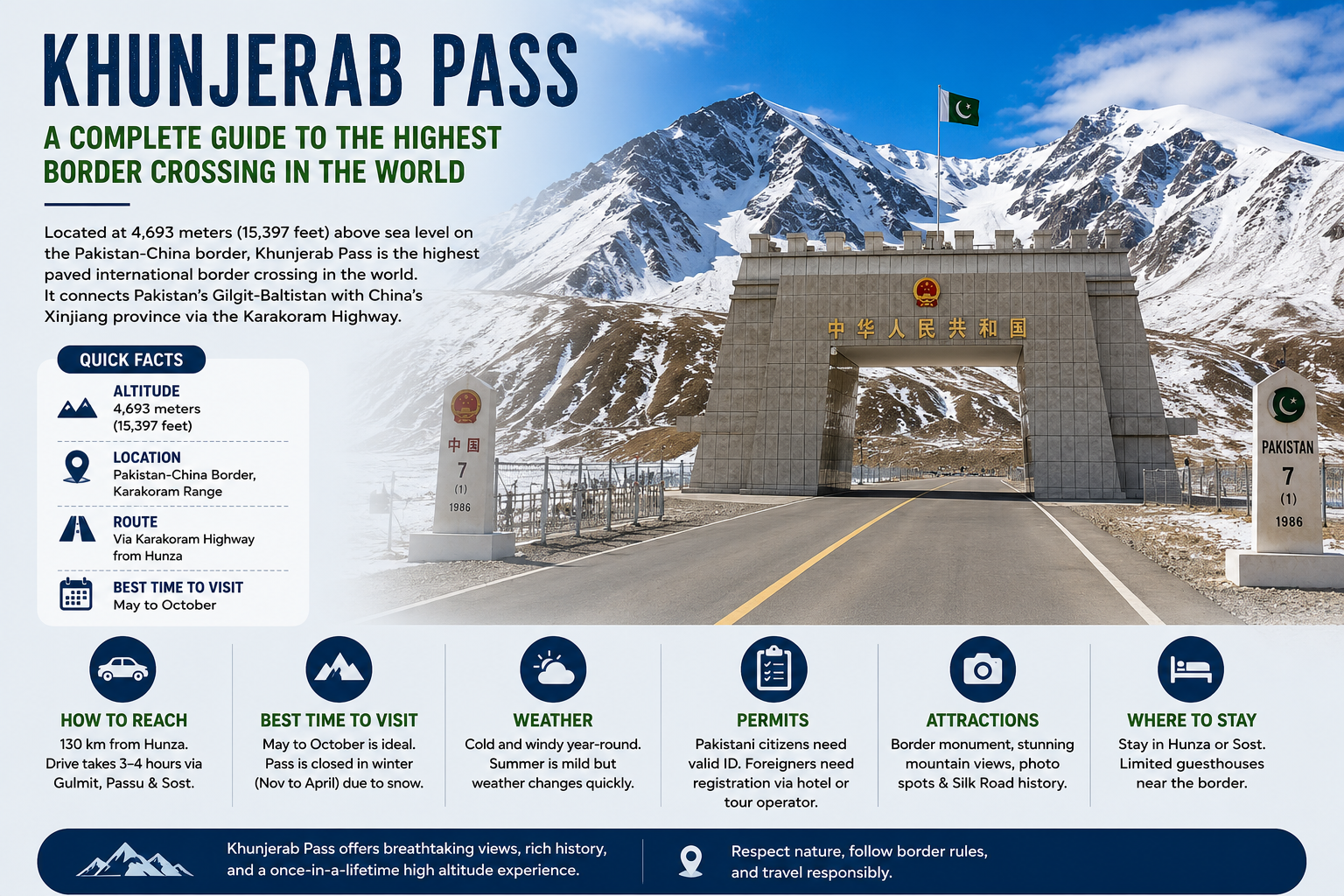
Khunjerab Pass is the highest paved international border crossing in the world, located at 4,693 meters (15,397 feet) above sea level on the Pakistan-China border. It sits at the far northern tip of Pakistan, where the [Karakoram Highway] climbs above the clouds and crosses into China. For travelers heading north from [Hunza], this pass usually marks the final stop before the road disappears into Chinese territory. This guide covers everything you need to plan a trip here, from permits and weather to where to stay after the long drive up.
What Makes Khunjerab Pass the Highest Border Crossing in the World
Most border crossings sit close to sea level. Khunjerab Pass does the opposite. It connects Pakistan’s Gilgit-Baltistan region with China’s Xinjiang province at an elevation that leaves many first-time visitors short of breath within minutes of stepping out of the car. The road itself, part of the Karakoram Highway, is often called the eighth wonder of engineering because of how it was carved through some of the steepest terrain on the planet.
A handful of other roads around the world claim high-altitude bragging rights, mostly in the Himalayas and the Andes. What sets this one apart is that it functions as a working immigration point and customs checkpoint, not just a scenic mountain pass. Trucks, traders, and tourists all use the same stretch of tarmac that sits higher than most commercial aircraft cruising altitudes felt from the ground.
The pass gets its name from the Wakhi word for valley of blood, a reference to the wolves and bandits that once made this route dangerous for traders moving along the old Silk Road between Central Asia and South Asia. Today, the danger has mostly given way to smooth tarmac and an organized border gate, though the setting still feels remote and a little untamed.
Khunjerab Pass Altitude and Location
The Khunjerab Pass altitude sits at 15,397 feet, or 4,693 meters, making it higher than many well-known mountain peaks across North America and Europe. It marks the boundary between Pakistan and China, inside the Karakoram mountain range along the historic Silk Road corridor that once connected traders from Kashgar to Gilgit.
Because of this height, the air here is noticeably thin, carrying roughly forty percent less oxygen than at sea level. Visitors coming straight from lower elevations sometimes feel lightheaded or short of breath, so a gradual approach through Hunza and [Sost] gives the body time to adjust before reaching the top, a key consideration for anyone new to high altitude travel.
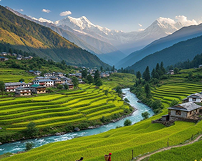
The surrounding peaks add to the scale of the place. Snow-capped ridges rise on both sides of the road, and glacial melt feeds several small streams that cross under the highway on their way down toward the Hunza River.
How to Reach Khunjerab Pass from Hunza
Most travelers base themselves in Hunza before making the trip north. The Khunjerab Pass distance from Hunza is roughly 130 kilometers, a drive that typically takes three to four hours one way depending on road conditions and how many stops you make along the way.
The route follows the Karakoram Highway through Gulmit, Passu, and Sost, passing glaciers, turquoise lakes, and small villages that cling to the mountainside. Sost is the last major town before the border zone, and it’s where most visitors stop for fuel, a meal, or a final check on paperwork before continuing.
If you’re wondering how to reach Khunjerab Pass without your own vehicle, private jeeps and shared vans are available from Hunza and Gilgit. Public transport thins out the closer you get to the border, so arranging a private driver is the more reliable choice for a same-day round trip.
Many travelers combine the drive with a stop at [Attabad Lake] or a short walk around Passu, breaking up the long stretch of road and giving the body a chance to adjust to elevation gradually rather than all at once.
Road conditions can shift after heavy rain or an early snowfall outside peak season, so it helps to check with the hotel front desk or a local driver the morning of the trip.
Best Time to Visit Khunjerab Pass
The best time to visit Khunjerab Pass falls between May and October. The pass closes for winter, usually from late November through April, once snow makes the road impassable, and border operations pause for the season.
June through September gives the clearest skies and the mildest daytime temperatures, though mild at this elevation still means bringing a heavy jacket. July and August draw the largest crowds since school holidays across Pakistan line up with the warmer weather.
May and October offer a quieter alternative for travelers who don’t mind cooler temperatures, with a mix of green meadow and leftover snow on the surrounding slopes.
Khunjerab Pass weather changes fast even in summer. Mornings can start clear and calm, then shift to wind and light snow by early afternoon; layered clothing works better than a single heavy coat.
Permit and Entry Requirements
Pakistani citizens don’t need a special permit to visit the pass itself, only a valid national ID card. Foreign nationals typically need to register their visit through their hotel or a local tour operator, handled a day in advance with copies of passport details.
Crossing into China from Khunjerab Pass is a separate matter entirely. That requires a Chinese visa arranged well before arrival, along with coordination with a licensed agency, since the border gate only opens on specific dates and hours.
There’s a small entry fee for Khunjerab National Park, since the road to the pass runs directly through protected land. Keep a printed copy of your ID or passport handy for the customs checkpoint along the way.
Khunjerab National Park and the Wildlife Around the Pass
Khunjerab National Park was established in 1975, largely to protect the Marco Polo sheep and the snow leopard, both of which live in this high-altitude terrain. Spotting either animal takes patience and a fair bit of luck, since they tend to stay well above the road on the surrounding slopes.
Ibex, red fox, and golden marmots show up more often, especially in the early morning hours when the park is quieter. Birdwatchers also come for species like the Himalayan snowcock, which nests in the rocky outcrops close to the pass.
The park’s landscape shifts from green alpine meadows lower down to bare rock and permanent snow near the summit. Very little grows at this height, which makes the pockets of wildflowers that appear in June and July stand out even more against the gray stone.
Where to Stay Near Khunjerab Pass
Since the pass itself has no lodging, most visitors stay in Sost or Hunza and treat the drive to Khunjerab as a day trip. Travelers planning an early morning trip often prefer staying in Sost to reduce travel time. This is one of the most common questions people ask when planning a route: where to stay near Khunjerab Pass that’s close enough for an early start but practical enough for a long day on the road.
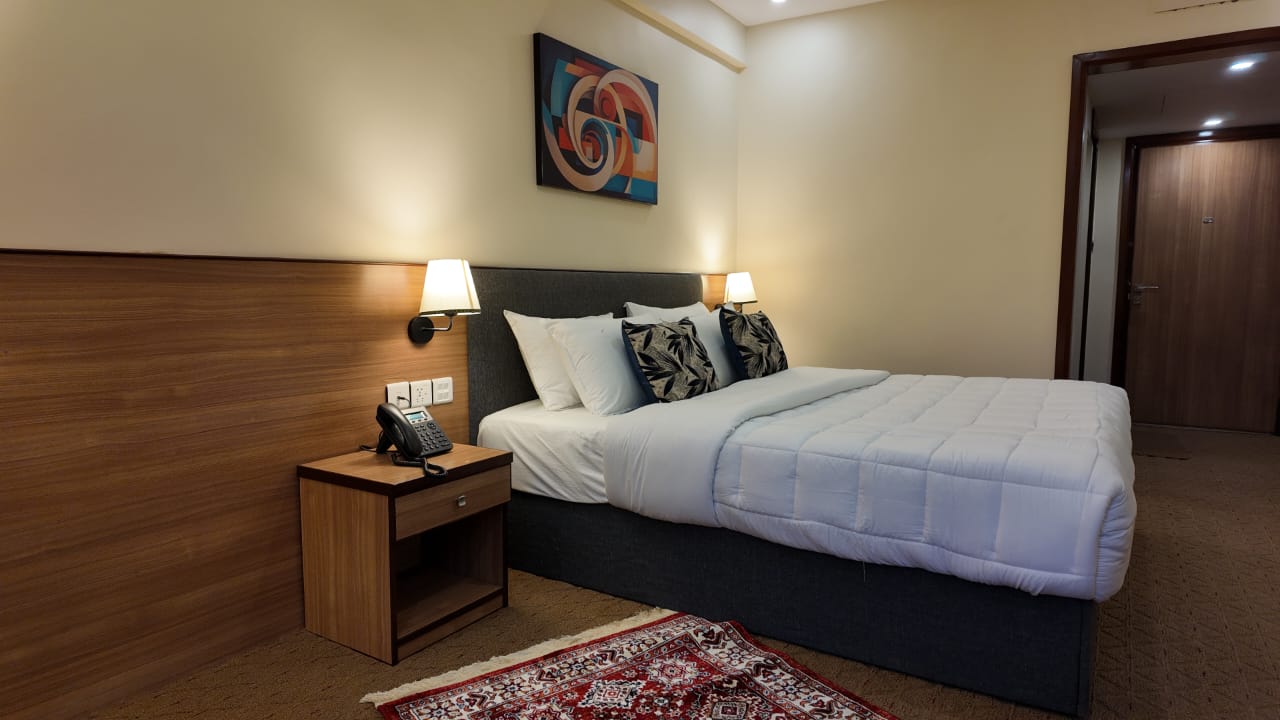
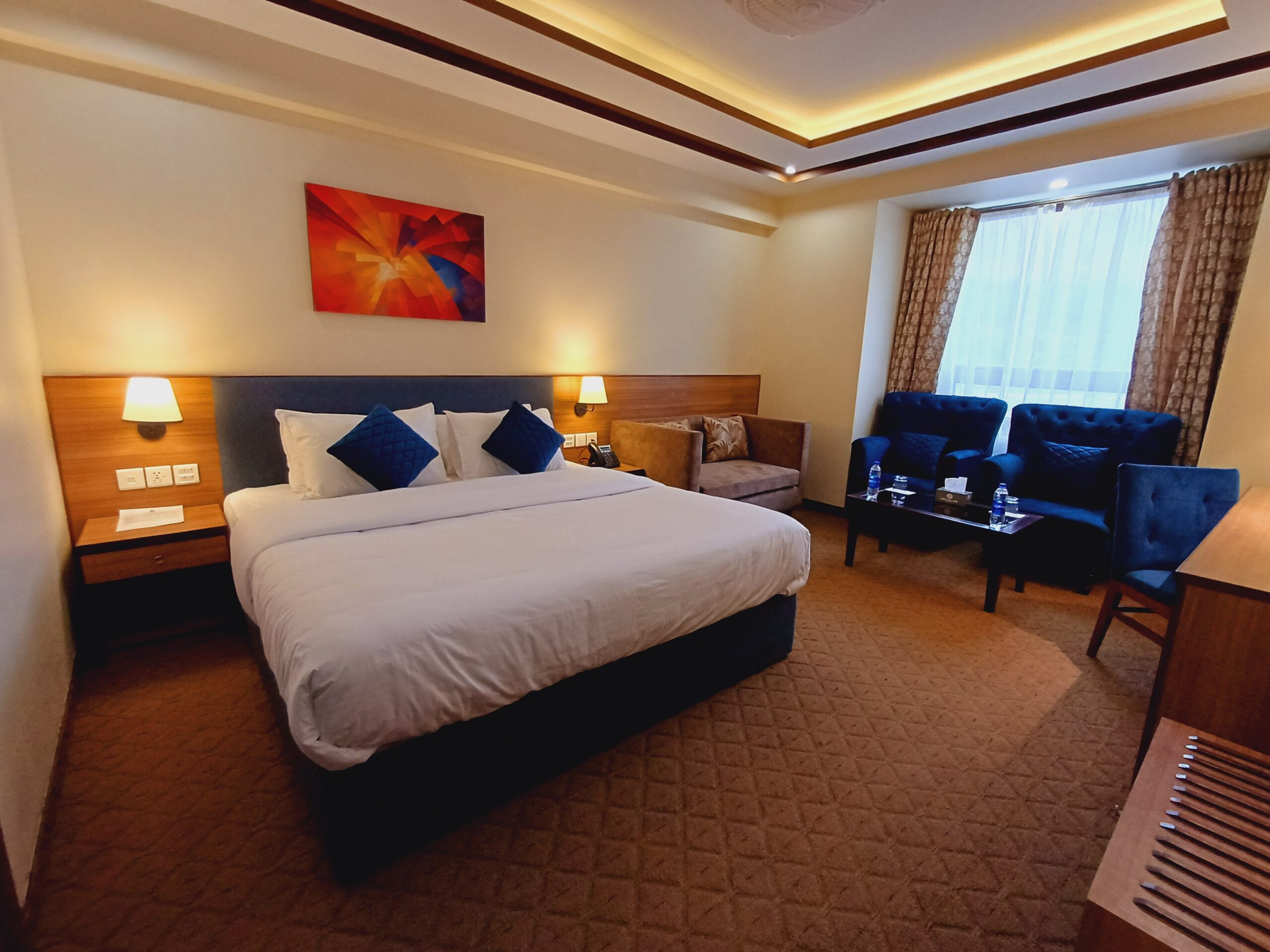
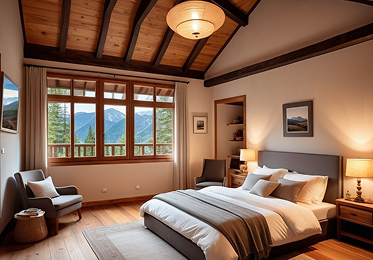
Fortune One Hotel in Sost fills that gap well. It sits directly on the Karakoram Highway, close to the final stretch of road before the border zone, which cuts down on early morning drive time considerably. Rooms range from a Deluxe Double Room for couples to a Superior Deluxe Room for guests who want extra space after a day of high-altitude travel.
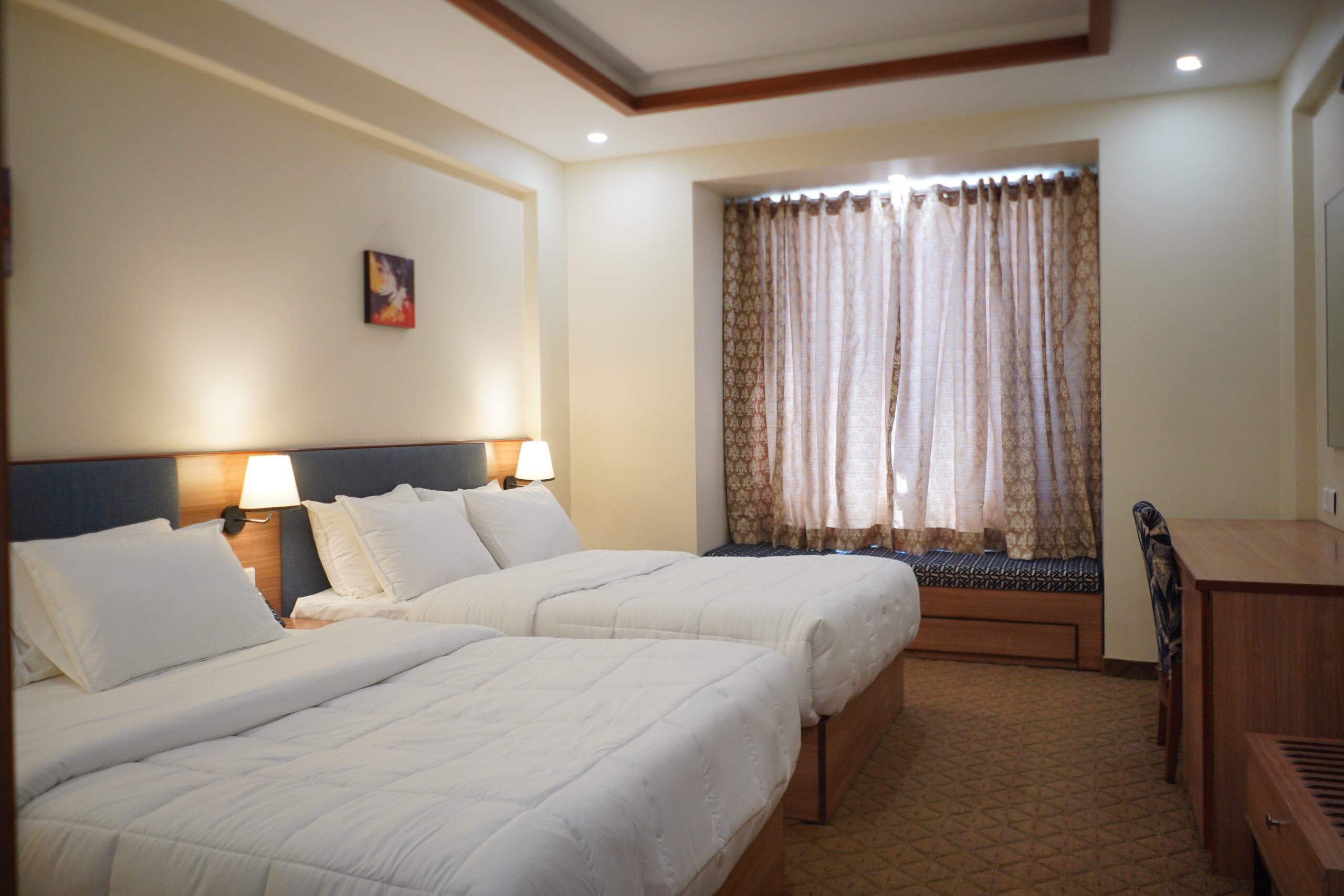
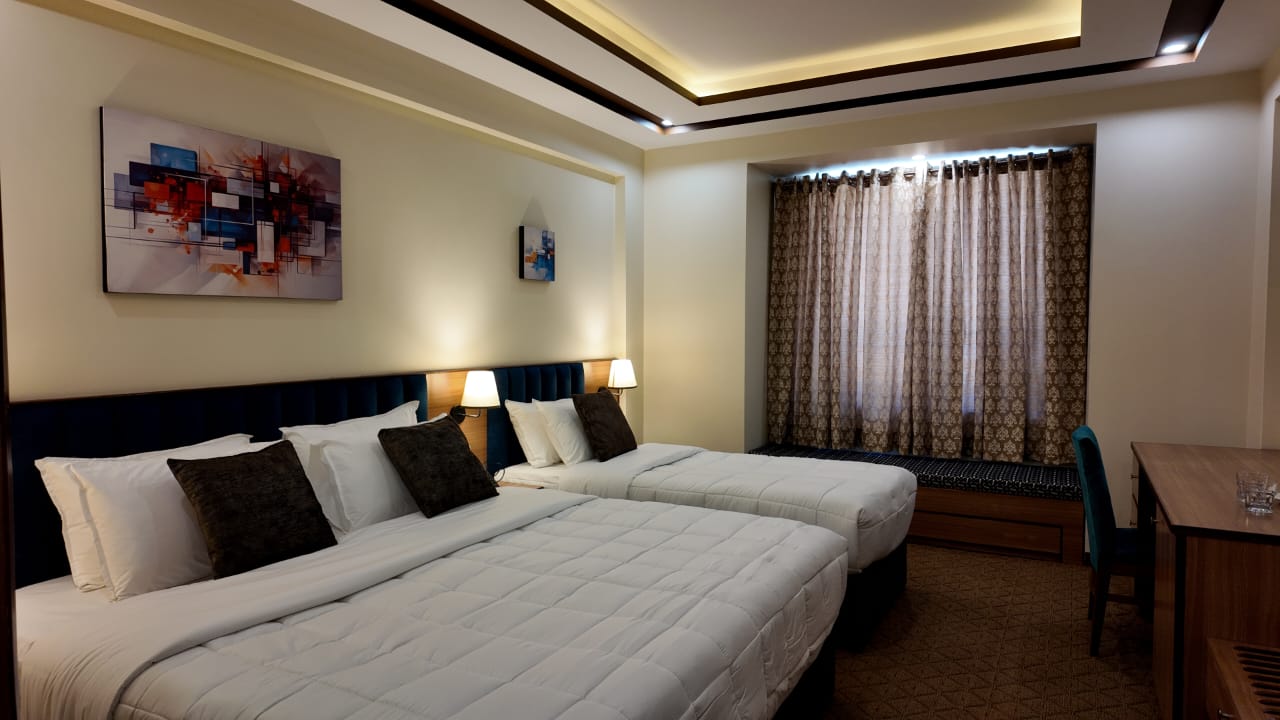
Families or groups traveling together often prefer a Deluxe Twin Room or a Deluxe Triple Room, both of which give enough room for extra luggage and layers of cold-weather gear. Every stay includes a daily breakfast buffet.
Checking current Hotel Booking Deals ahead of the summer travel season is worth the extra few minutes, since rooms in Sost fill up quickly during peak months.
Practical Tips for Visiting Khunjerab Pass
Bring cash. There are no ATMs near the pass, and card payments are unreliable this far from major towns. Fill up on fuel in Hunza or Sost before heading up, since the last fuel station sits well before the border zone begins.
Altitude affects people differently. Drink water throughout the drive, skip heavy meals right before the ascent, and give yourself time to adjust if you’re prone to headaches at elevation.
Phone signal disappears for long stretches along this section of the highway. Let your hotel know your rough return time before setting out.
Pack for cold weather regardless of the season. Gloves, a warm hat, and a windproof jacket make the time spent standing at the border marker far more bearable.
Frequently Asked Questions About Khunjerab Pass
Q1: How high is Khunjerab Pass above sea level?
The summit sits at 15,397 feet, or 4,693 meters, which makes it the highest point along the entire Karakoram Highway and the highest paved crossing between any two countries in the world.
Q2: Can tourists cross into China at this border?
Only travelers with a valid Chinese visa and pre-arranged agency coordination can cross the actual border line. Most tourists stop at the marker on the Pakistani side, take photos, and turn back toward Sost the same day.
Q3: Is the road safe for a normal car?
The Karakoram Highway is paved the entire way to the summit, so a standard car handles the drive fine in good weather. Some travelers still prefer a 4×4 for extra ground clearance near the top, especially outside peak summer months.
Q4: How long should a trip from Hunza take?
Plan for a full day. The round trip covers roughly 260 kilometers total, and most visitors spend six to eight hours away from their hotel once stops for fuel, photos, and altitude breaks are factored in.
Q5: What should first-time visitors know before going?
Altitude sickness is the biggest factor to plan around. Anyone with a history of headaches or breathing trouble at elevation should talk to a doctor before the trip and avoid rushing the ascent without breaks.
Conclusion
Khunjerab Pass earns its reputation the moment the road climbs past the last patch of green and into open rock and sky. Few places let you stand at 15,397 feet, look across an international border, and know you drove there on paved road the entire way. Whether you’re chasing the title of highest border crossing in the world for the story or simply want to see the Karakoram at its most dramatic, this stretch of the Karakoram Highway delivers on both counts. Book your stay in Sost before peak season to make your Khunjerab Pass trip more comfortable and flexible.